 riposte
The short answer
A useful LinkedIn engagement routine starts with a small list of relevant people. Check who deserves attention, read a fresh post, add something specific and review who responds. Set a time limit rather than a comment quota.
For a small B2B team, the difficult part is usually deciding where to spend attention. An open feed offers plenty of posts. It does not tell you which conversation matters to your business, or which person has gone quiet in your week.
The routine below is the working pattern behind Riposte’s morning run. Ten minutes is a design target. It is not a measured result or a promise that every session will fit.
Choose the people before you open the feed
Start with the companies you want to reach and the people who matter at those companies. Give each person on your team a clear focus. A founder might follow a peer’s views on company building. A product lead might have more to contribute to a product leader’s discussion about adoption.
This is a choice about relevance, not seniority alone. Someone with a smaller audience may be a better conversation partner than a prominent founder whose work has little to do with yours.
Riposte can screen a prospect list for people who actually post. In one customer setup, it checked 5,247 people and found 1,266 active profiles to monitor. That is a useful distinction before anyone starts commenting. Read the setup example.
Use a ten-minute working budget
Use the times as a starting allocation. If a thoughtful reply takes the whole session, write that one reply. There is no need to fill the remaining time with weaker comments.
| Time | Action | Finish when |
|---|---|---|
| First 2 minutes | Check people due attention. | You have someone relevant with a fresh post. |
| Next 3 minutes | Read the post and discussion. | You understand the point and what others have added. |
| Final 5 minutes | Draft, edit and post a reply. | You have said something useful in your own words, or decided to skip. |
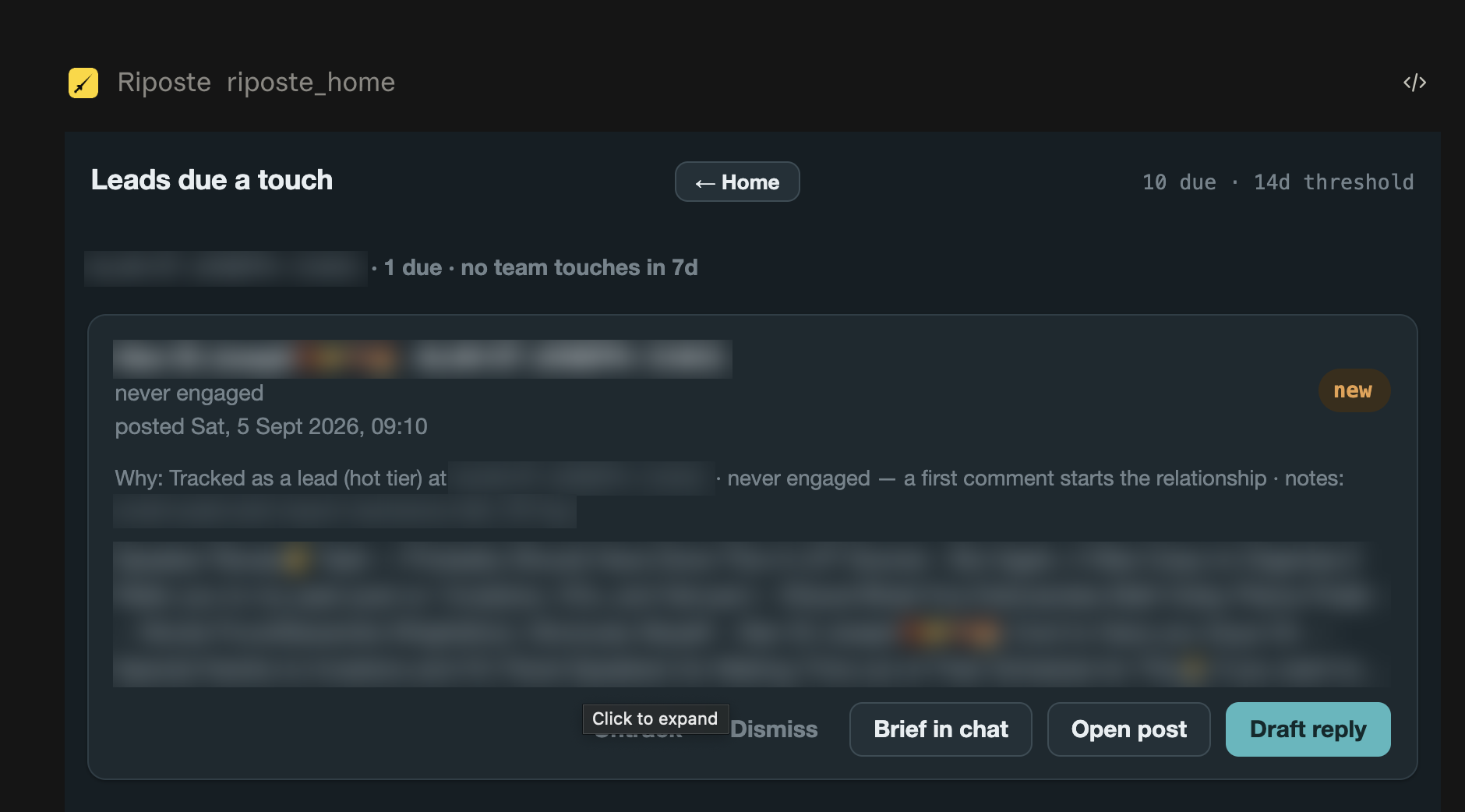
In Riposte, ask Claude for your Morning engagement run. The relationship radar comes first. It finds people who are overdue a touch and have something fresh worth replying to. The feed then ranks posts by how unusually well they are doing for their own author.
Find the part you can add to
Look for a specific point. Can you give a relevant example, name a useful trade-off or ask a question that follows from the author’s argument? If your reply would make sense under almost any post, it needs more work.
A draft should reduce the work of getting started. It should not replace reading the post. Check that it reflects something you believe and does not invent an experience you have never had.
Riposte builds voice guidance from 3 to 8 of your real comments, alongside a team-wide reply guideline. You read and edit the result. You then open LinkedIn and post it yourself. See the guide to drafting in your own voice.
Make skipping part of the routine
A person being overdue does not make every new post a good opening. You may have nothing to add. The post may be a personal announcement or a topic outside your experience. Treat that as a reason to leave it alone.
Riposte can say “skip today”. This is useful because a routine built around a fixed number of comments can become an exercise in filling a quota. The habit to keep is checking where you can be useful.
Review the conversations once a week
Ask which people replied, which exchanges continued and which target accounts still have little coverage. Compare a consistent period and keep a note of meaningful next steps outside the public thread.
Riposte’s Weekly engagement review shows conversations started, replies and new engagers against the previous week. Once your profile is verified, reply outcomes are found automatically. A reply is evidence of a response. It is not evidence that a sale happened.
Use the review to decide who to return to next week. For a practical measurement plan, read what to measure after the comment.
Riposte brings relevant people, post context and reply drafting into Claude. You always post.
Questions about access, data or pricing?